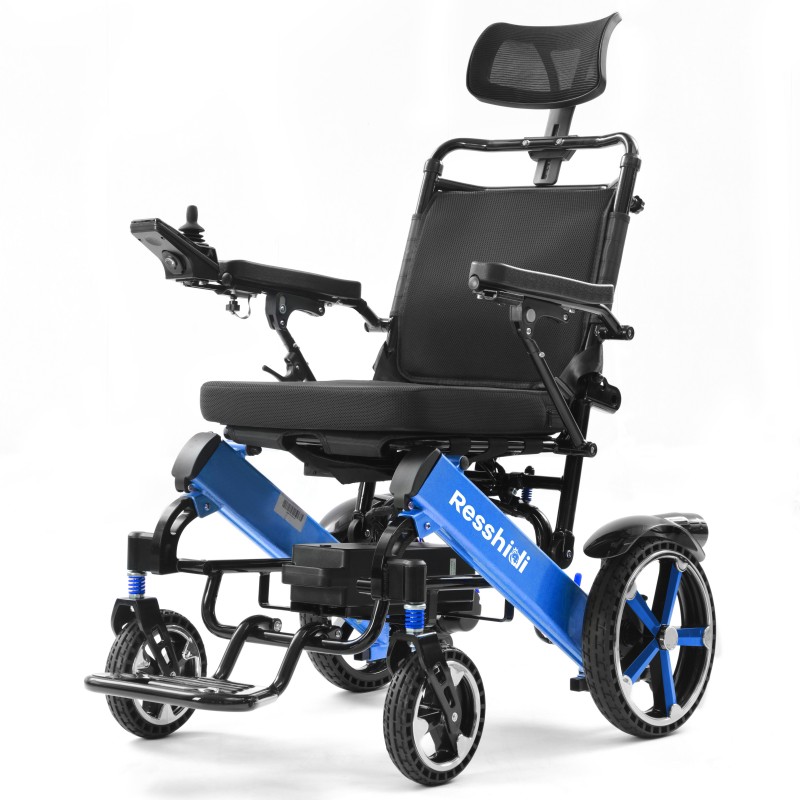
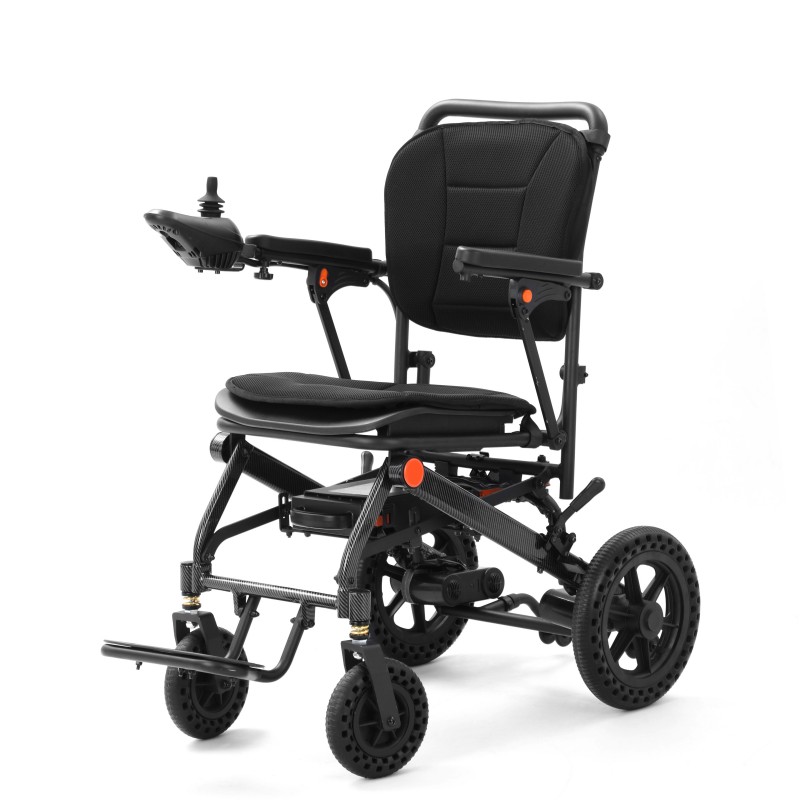
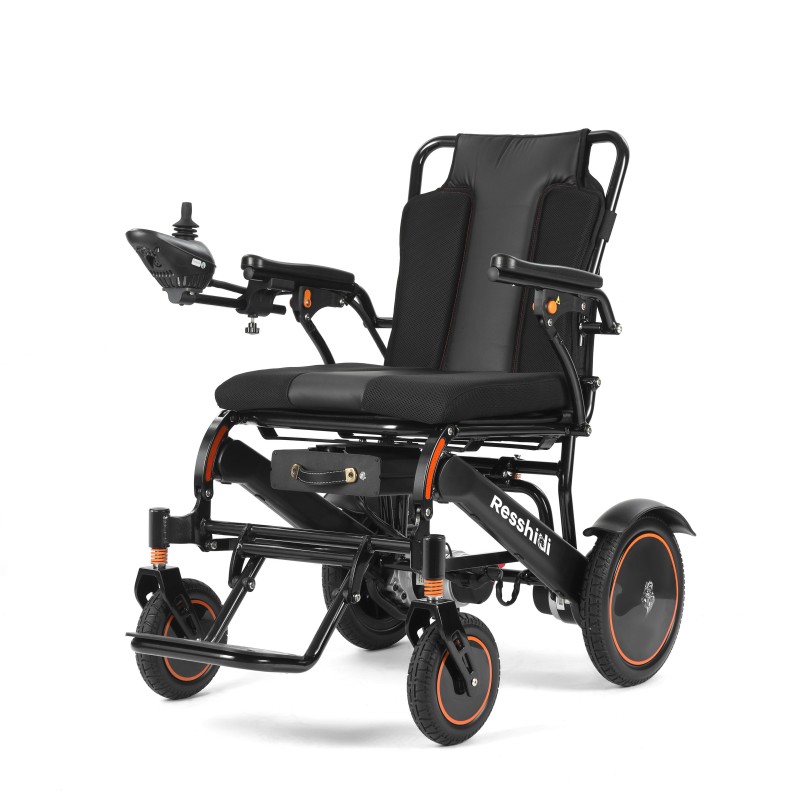
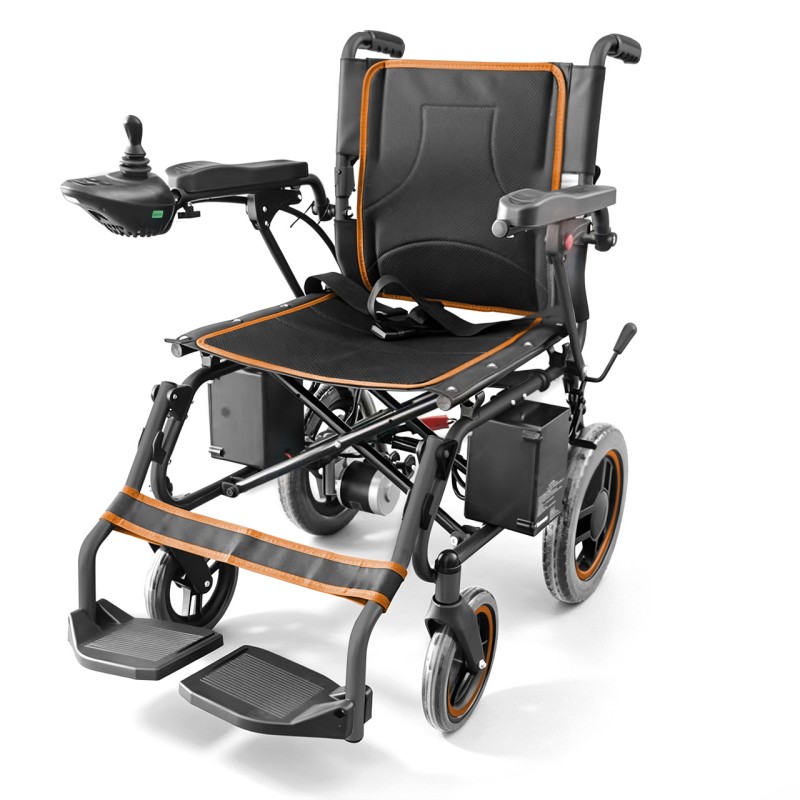
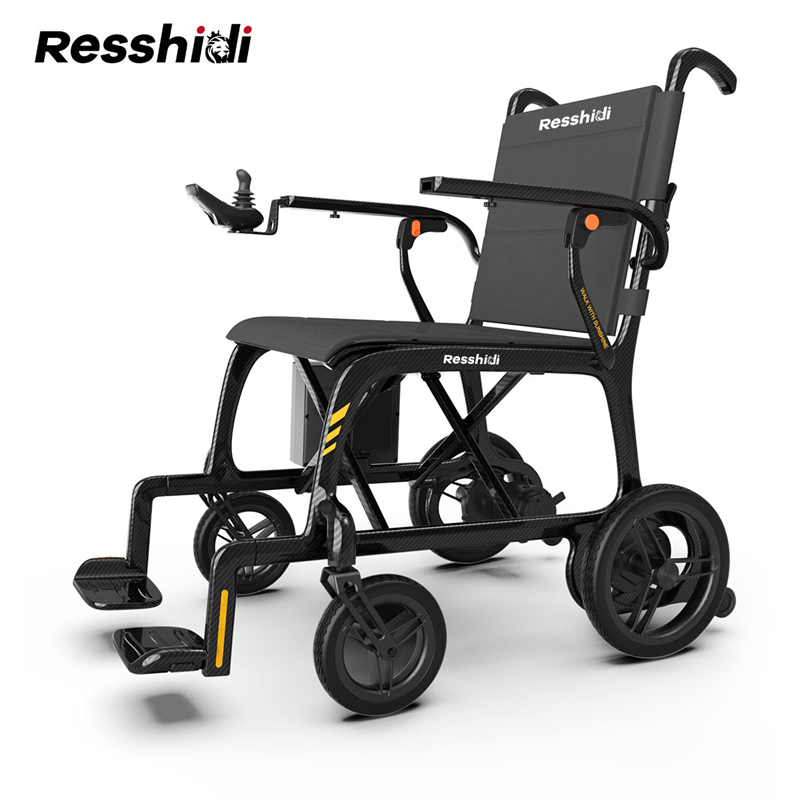
For electric wheelchair users, speed is often one of the most intuitive performance indicators. However, the actual speed and stability of a wheelchair depend on the interplay of multiple technical parameters working in concert. Understanding these factors not only helps users operate their devices correctly but also enables them to make more informed decisions when purchasing a wheelchair. In this article, we will analyze the technical logic behind electric wheelchair speed from four key dimensions: the motor, the battery, the control system, and the operating environment.
I. Motor Power: The Source of Propulsion
The motor serves as the power core of an electric wheelchair; its output power directly determines the wheelchair's top speed and climbing capability. Currently, the motors in mainstream electric wheelchairs on the market typically range in power from 200W to 500W.
The higher the power output, the stronger the driving force the wheelchair can generate, resulting in faster acceleration response. For users who frequently navigate outdoor ramps or inclines, a motor with an output of 250W or higher often provides a smoother and more effortless riding experience. However, greater power is not always better—excessively high power consumption can deplete the battery faster, thereby reducing the wheelchair's travel range. In its product design, Resshidi consistently prioritizes the balance between power and range, ensuring that users find the optimal equilibrium between speed and distance.
II. Battery Voltage and Discharge Capability: The Energy Foundation
The battery is not merely the energy source for an electric wheelchair; its voltage level and discharge performance also directly impact speed performance. Most standard electric wheelchairs utilize a 24V battery system, while certain high-performance models employ a 48V system.
The higher the voltage, the greater the instantaneous power the motor can draw, resulting in superior performance in scenarios requiring high torque output—such as starting from a standstill or climbing inclines. Compared to traditional lead-acid batteries, lithium-ion batteries offer higher discharge efficiency and more stable voltage output; they can maintain relatively consistent speed performance even as the charge level drops, thereby avoiding the common phenomenon where "speed slows down as battery power runs low."
III. Controller Algorithms: The Speed Orchestrator
The controller acts as the "brain" of the electric wheelchair, responsible for receiving commands from the joystick and regulating the motor's output. The software algorithms embedded within the controller have a decisive influence on the overall speed experience.
Controllers from different brands and models vary in terms of their acceleration curves and response sensitivity. Some controllers employ a linear acceleration design, ensuring smooth and natural speed transitions—an ideal choice for users who prioritize precise handling. Others prioritize dynamic responsiveness, offering quicker starts and more direct acceleration. Furthermore, controllers typically feature a built-in speed-limiting function to meet safety requirements across various scenarios; users can adjust the maximum speed within a prescribed range to suit their specific needs.
IV. Tires and Road Conditions: The Real-World Manifestation of Speed
Even with a powerful propulsion system, tire type and road conditions significantly impact actual travel speed. Pneumatic (air-filled) tires, thanks to their elasticity and superior grip, offer more efficient rolling performance on outdoor surfaces. Conversely, airless solid tires—while convenient in terms of maintenance—generate higher rolling resistance, resulting in a slight reduction in speed compared to pneumatic tires at the same power output.
Road surface material is equally critical. Smooth, paved surfaces allow a wheelchair to achieve its maximum potential speed, whereas soft ground, rough brickwork, or gravel paths increase rolling resistance, thereby reducing speed. This explains why the same wheelchair may exhibit varying speed performance across different environments.
V. Load Weight and Routine Maintenance: Variables That Cannot Be Overlooked

The combined weight of the user and any carried items directly affects the wheelchair's load burden. A heavier load requires the motor to generate greater torque; consequently, under identical power conditions, the travel speed will decrease proportionally. Routine maintenance is equally vital—factors such as insufficient tire pressure or poorly lubricated bearings increase resistance, thereby compromising speed performance.
Resshidi’s Perspective: Beyond Speed—Focusing on the Holistic Experience
At Resshidi, we believe that speed represents just one dimension of an electric wheelchair's overall performance. A truly exceptional mobility experience is, in our view, an organic synthesis of speed, battery range, stability, and comfort. When designing each product, our engineering team conducts rigorous testing to optimize the synergy between the motor, battery configuration, and controller logic, ensuring that users enjoy a reliable and secure driving experience in any setting.
If you have specific requirements regarding wheelchair speed, or if you require expert guidance during the selection process, we invite you to contact the Resshidi customer service team. Based on your usage habits and environmental conditions, we will recommend the most suitable product configuration to ensure that every journey is both comfortable and effortless.
 Hot News
2026-02-28
2026-02-23
2026-02-18