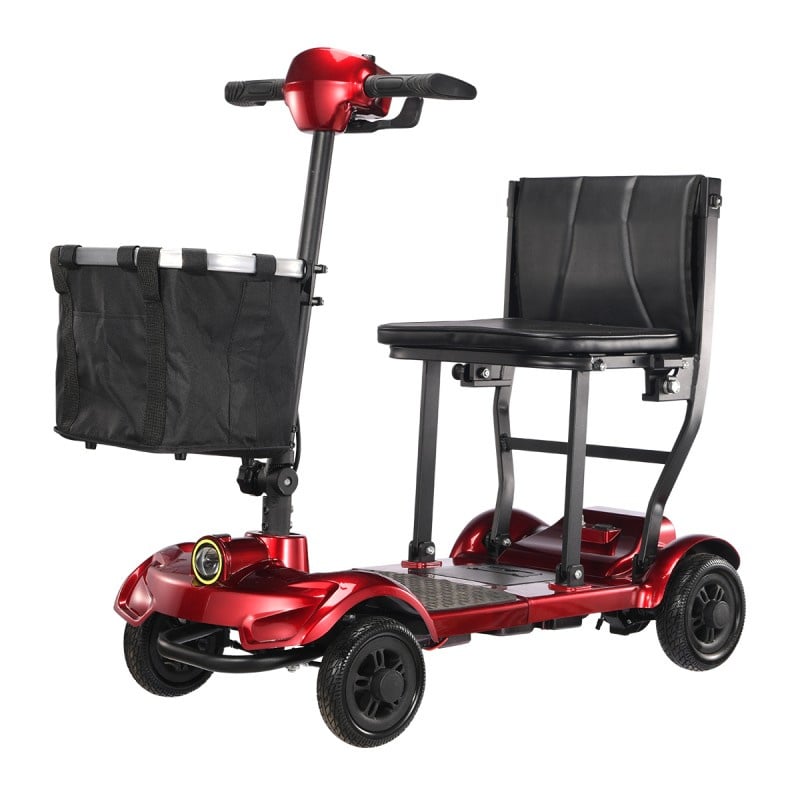
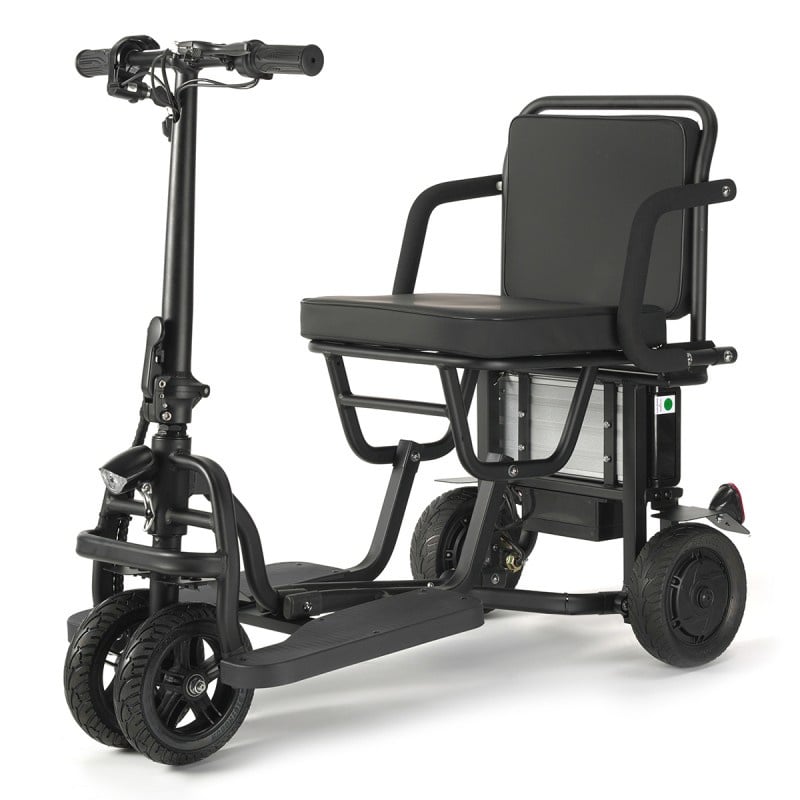
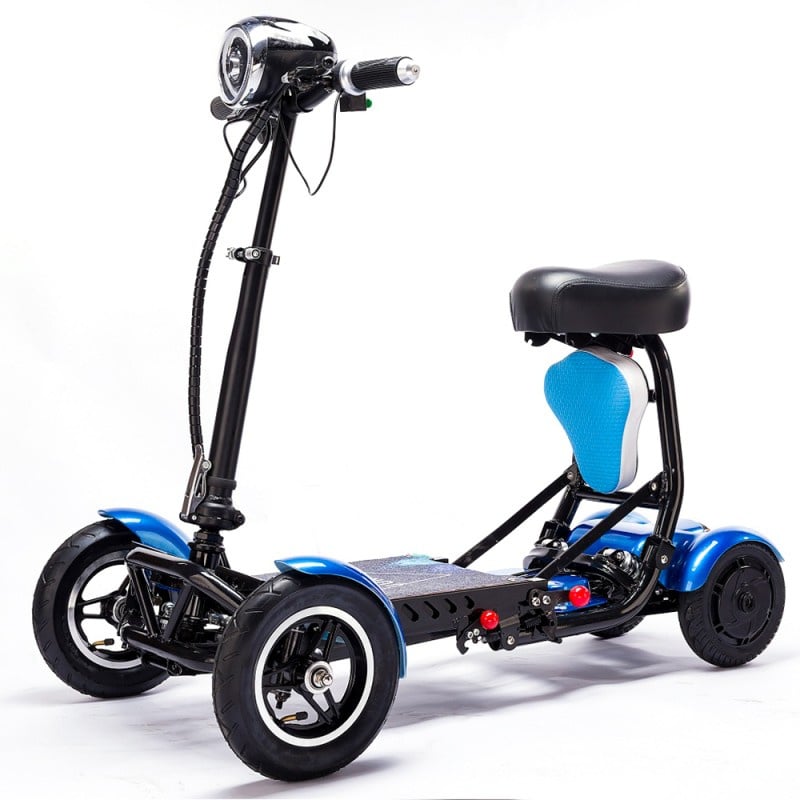
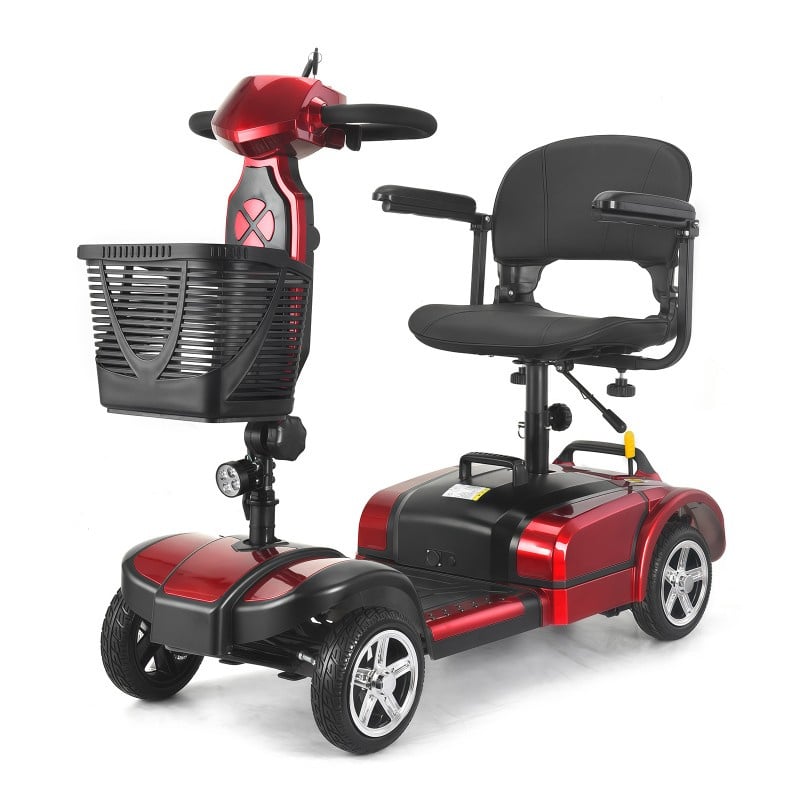
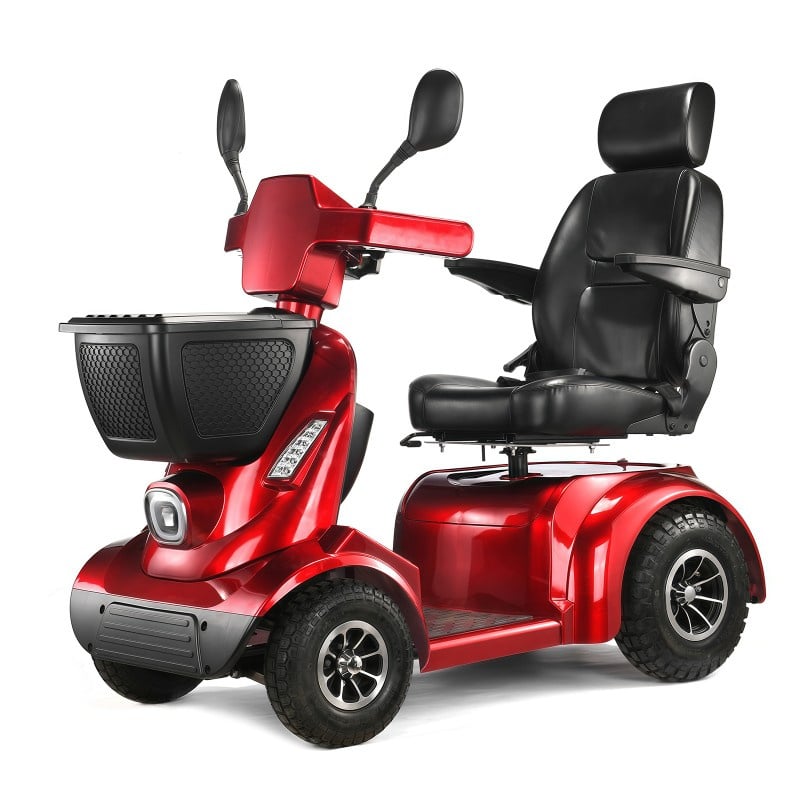
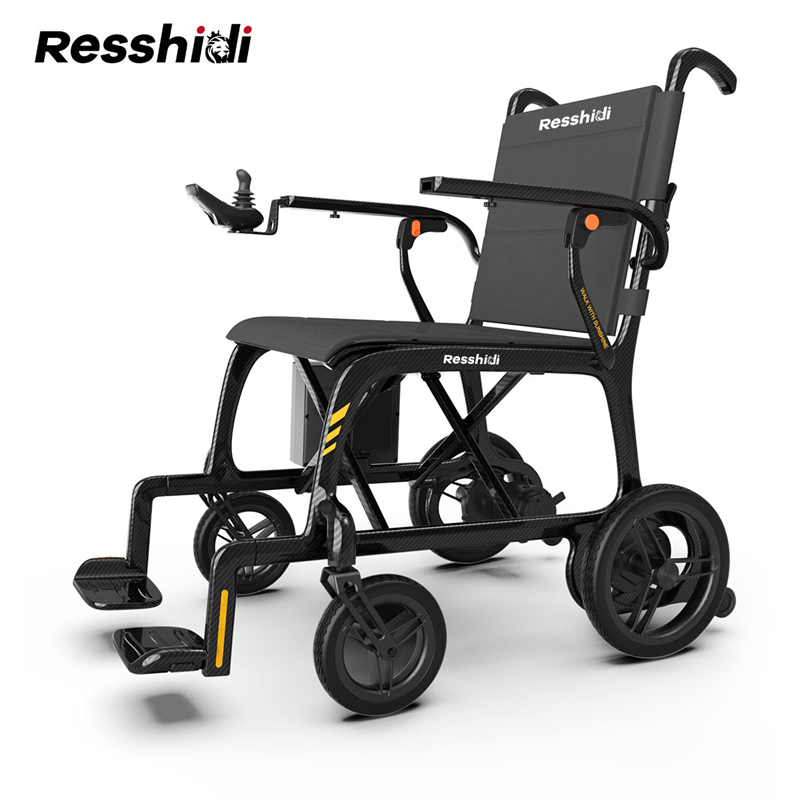
In the electric wheelchair's driving system, tires, as the components in direct contact with the ground, directly impact riding comfort, traction, and maintenance costs. Currently, the mainstream solid tires, pneumatic tires, and honeycomb tires on the market each have their advantages in different usage environments due to differences in structural design.
Solid Tires: A Robust Solution with Zero Maintenance
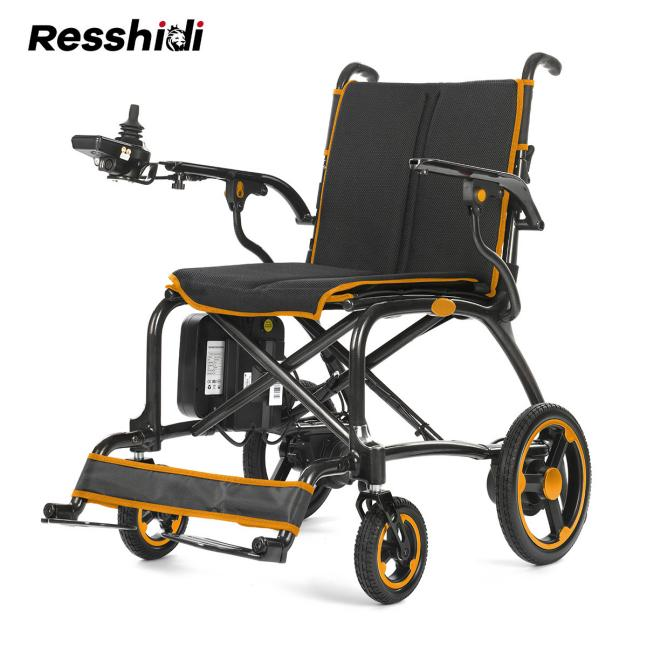
Solid tires are made of high-elasticity rubber in a single molded piece, without an inner tube, fundamentally eliminating the risk of punctures, leaks, or blowouts. For users who frequently travel around construction sites or on gravel roads, their puncture resistance is a natural advantage, and no tire pressure checks or repairs are required, making maintenance virtually zero.
The drawback is weaker shock absorption—when going over speed bumps or potholes, the impact is directly transmitted to the frame, easily causing fatigue during long rides; at the same time, their greater weight (approximately 30% heavier than pneumatic tires) slightly affects range. If a tire gets stuck in a groove the same width as itself, external force is needed to get it out.
Pneumatic Tires: A Traditional Choice Prioritizing Comfort
Pneumatic tires rely on compressed air to cushion road impacts, providing optimal shock absorption on smooth paved surfaces. Their softer rubber compound and adjustable tire pressure enhance grip on wet surfaces, reducing the risk of skidding during cornering. However, their airtight structure makes them sensitive to sharp objects, requiring regular tire pressure checks. Long-term use may lead to slow leaks or tire wear.
Typical Suitable Scenarios:
Urban Daily Commuting: Asphalt or concrete roads offer maximum comfort.
Large-diameter Vehicles (12 inches and above): The pneumatic structure significantly enhances shock absorption for larger tires.
Those Sensitive to Bumps: Those with lower back or knee discomfort should prioritize a smooth ride.
Honeycomb Tires: A Balanced Choice with an Innovative Structure
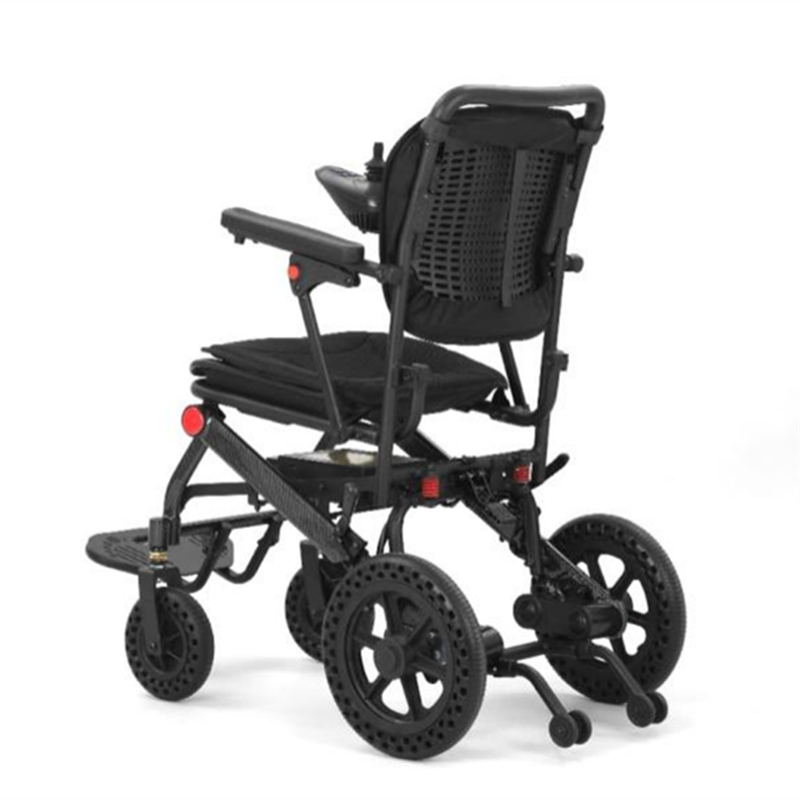
Honeycomb tires, inspired by biomimicry, use dense hexagonal holes instead of air chambers, achieving both puncture resistance and basic cushioning. Its porous structure disperses road impacts, offering shock absorption performance between solid and pneumatic tires, and it requires absolutely no maintenance. However, when driving on smooth, hard surfaces (such as tiled halls), the compression of the pores may cause slight resonance; the precision molding process increases production costs by approximately 20% compared to traditional tires.
Typical Suitable Scenarios:
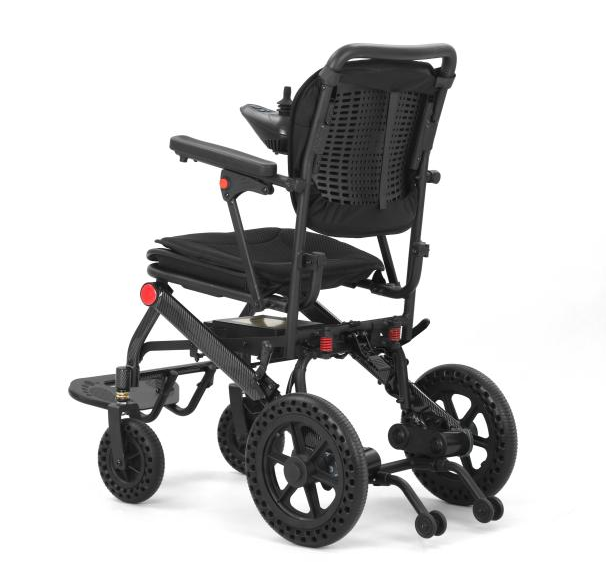
Mixed Road Condition Users: Caters to light off-road needs such as community roads and park slopes;
Shared Rental Operators: Low failure rate under high-frequency use, controllable maintenance costs;
Environmentally Stringent Areas: Complies with new EU regulations on the percentage of recyclable materials, making disposal easier.
Regional Configuration Recommendations:
Hot and Humid Areas (such as Southeast Asian Coastal Areas): Honeycomb tires or solid tires with anti-rust coatings can delay rim corrosion;
Cold Areas (Nordic/Canadian): Pneumatic tires require the addition of antifreeze to prevent freezing, while solid tires maintain low-temperature elasticity through formula adjustments;
Cost-Sensitive Procurement (such as bulk tenders for welfare institutions): Solid tires offer a higher overall benefit due to their long lifespan and zero maintenance costs.
 Hot News
2026-02-28
2026-02-23
2026-02-18